
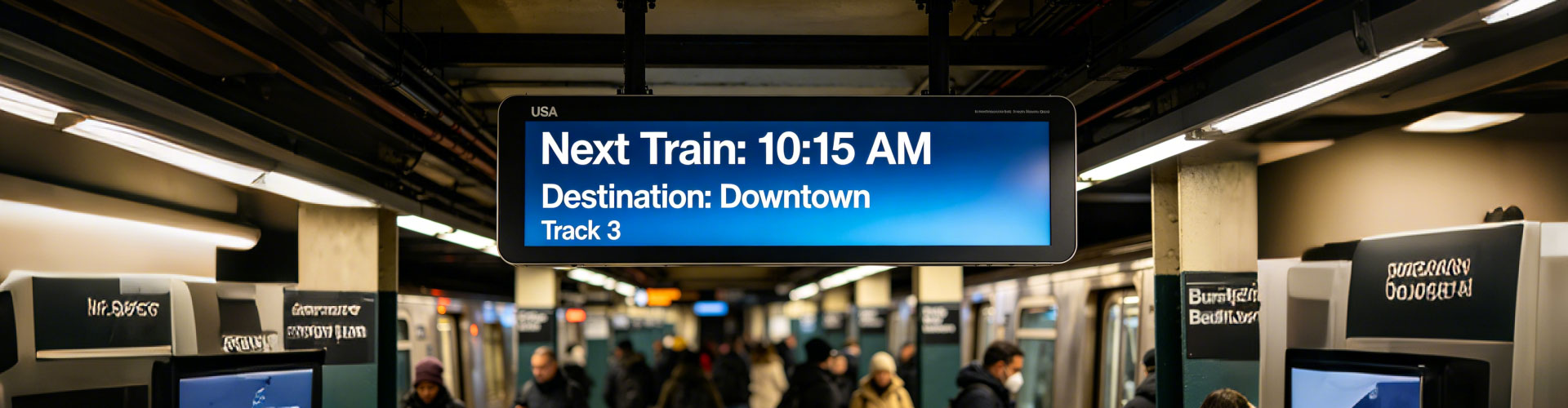
Industry pain points and challenges
Understand the core issues in this application scenario and how we can provide solutions through advanced display technology
core pain point
Compliance Isn't a Formality. It's the Entry Ticket.
The procurement reality in North America and Europe Transit operators in the US and Europe don't buy display hardware through standard commercial channels. They procure through government-regulated frameworks that carry legal weight at every stage. In the United States, any project receiving Federal Transit Administration (FTA) funding is subject to Buy America provisions, which mandate that key components be manufactured or assembled domestically. Beyond that, the ADA sets enforceable standards for automated stop announcement systems — font contrast ratios, mounting heights, multilingual support — and "enforceable" means exactly that: DOT compliance reviews have documented that operator-based announcement programs achieve required stop announcements less than 50% of the time, and the record of federal lawsuits over ADA non-compliance in transit is substantial. A display that doesn't meet ADA requirements isn't a procurement risk. It's a litigation risk. In Europe, EN 50155 is the mandatory certification standard for electronic equipment installed on rolling stock. The standard is not a checklist exercise. It assumes the equipment will operate continuously for 30 years — approximately 250,000 hours — and mandates type-approval testing across vibration, shock, thermal cycling, power supply fluctuation, and EMC. The UK's Rail Vehicle Accessibility Regulations (RVAR) and the EU's TSI PRM (Technical Specification for Interoperability — Persons with Reduced Mobility) add specific legal requirements for character size, viewing angle, and display luminance. These aren't advisory guidelines. Non-compliance means the vehicle cannot be put into service. What this means for vendors Most display manufacturers from China can provide a CE mark. Full EN 50155 type certification — covering T1 temperature class, S1 humidity class, and Category 1 vibration — requires independent third-party laboratory testing that is expensive, time-consuming, and completed by only a small fraction of suppliers. In practice, system integrators responding to transit RFQs screen for compliance documentation in the first round of evaluation. Without an EN 50155 type test certificate, an ADA compliance declaration, or a Buy America compliance statement, a vendor doesn't make it to technical review — regardless of hardware quality or price. That barrier eliminates the majority of available products from consideration. But it also means that the vendors who can clear it are operating in a market with almost no price competition on compliant product.
A Display Going Dark on a Bus Isn't a "Minor Fault." It's an Accessibility Failure.
The real cost of downtime for transit operators When a display screen fails on a bus or metro car, passengers lose access to next-stop information and real-time service alerts. In a transit context, that's not a user experience issue — it's an ADA compliance interruption. The FTA's maintenance-of-accessible-features requirement is clear: while isolated failures don't constitute discrimination, a pattern of recurring outages does, and it can trigger a formal FTA corrective action order. The financial exposure compounds this. Industry data puts unplanned transit vehicle downtime at $448 to $760 per day per vehicle in combined direct and indirect costs. A single unplanned breakdown — accounting for emergency labor rates, expedited parts, and service disruption — averages $8,500. Displays are a relatively small line item in a vehicle's overall bill of materials, but in the maintenance classification framework of US and European transit agencies, they sit in the same compliance tier as wheelchair ramps and securement systems. The maintenance obligation doesn't scale with the component's cost. What "transit-grade reliability" actually requires This translates into concrete hardware specifications that most commercial display products don't meet: LED backlight MTBF ≥ 50,000 hours (approximately 5.7 years of continuous operation) Operating temperature range: -20°C to +70°C — the interior temperature near bus doors on a summer route in Phoenix or Madrid can exceed 65°C IP54 ingress protection minimum, to handle passenger-generated humidity and cleaning fluid overspray IEC 60068-2-64 random vibration compliance for road vehicle profiles (5–150 Hz swept sine) But arguably the most underweighted specification in transit procurement is the spare parts availability commitment. Transit authorities in the UK, Germany, and France routinely include a minimum seven-year spare parts guarantee in their RFQ requirements. The reason is straightforward: an agency that deploys a display system across 300 vehicles cannot afford to have that system become unmaintainable three years later because the supplier discontinued the product line. In competitive evaluation, this commitment carries significant weight — and most vendor proposals don't include it.
The Display Is the Last Problem. Data Integration Is Where Projects Actually Fail.
The system integrator's perspective For the system integrators responsible for deploying PIS infrastructure across urban transit networks, the display hardware is one component in a larger data pipeline. The engineering challenge is making the screen do something useful — which means pulling live GPS position data from the AVL (Automatic Vehicle Location) system, ingesting real-time delay and route change feeds from the operator's CAD (Computer-Aided Dispatch) platform via GTFS-Realtime or SIRI protocols, and managing content updates across hundreds of vehicles through a central CMS. In practice, the embedded Android systems shipped with most stretched bar displays are heavily customized closed builds. They don't expose documented REST APIs or MQTT interfaces. They don't support third-party digital signage platforms — Scala, Yodeck, Screenly, or the operator's existing fleet management stack. They can't receive real-time data pushes from a city transit operations center. Every integration project becomes a custom software development engagement rather than a repeatable, scalable deployment. What this costs, in real terms Research into rail supply chain performance attributes 35% of equipment downtime directly to spare parts and integration shortfalls. On a typical urban bus PIS deployment covering 200 vehicles, if each unit requires three to five additional days of custom integration work, the project absorbs hundreds of engineering days that weren't in the original budget — typically far exceeding whatever was saved on hardware unit cost. The longer-term problem is vendor lock-in. A closed system architecture means the transit authority is tied to a single supplier for the entire service life of the equipment. When the contract comes up for renewal, there's no competitive leverage. When the city upgrades to a MaaS (Mobility as a Service) platform or introduces real-time multimodal connection data, the display infrastructure can't accommodate it without a full hardware replacement. For transit IT directors and procurement leads evaluating display systems, a closed architecture isn't a preference issue. It's a risk line item on the technical evaluation scorecard — and it's the argument used to eliminate vendors who can't demonstrate open-system compatibility.
Our technological advantages
We provide industry-leading display technology and customized solutions to meet the special requirements of this application scenario
Compliance-Ready Transit Display Solution
HTILCD provides transit-grade stretched bar displays designed for North American and European procurement standards. Our solutions support EN 50155, ADA, TSI PRM, vibration, EMC, and wide-temperature requirements, helping system integrators pass technical qualification faster and reduce RFQ risk. With full certification documentation and long-term spare parts support, transit operators gain a reliable platform for fleet lifecycle management.
High-Reliability Fleet Display Solution
Built for buses, metro systems, and rail vehicles, HTILCD transit displays are engineered for continuous operation in harsh onboard environments. Native ultra-wide panels, 1000–1500 nits sustained brightness, optical bonding, IP54/IP65 protection, and anti-vandal glass ensure long-term readability and durability under vibration, temperature fluctuation, humidity, and passenger contact. The result is lower maintenance frequency and improved fleet uptime.
Open Architecture Smart PIS Integration Solution
HTILCD transit display systems are designed for seamless integration into modern Passenger Information Systems (PIS). Supporting REST API, MQTT, GTFS-Realtime, and SIRI protocols, our displays connect easily with AVL, CAD, CMS, and real-time transit data platforms. Multi-zone content management, OTA updates, and 4G/5G connectivity allow operators and integrators to deploy scalable, real-time passenger communication systems without vendor lock-in or costly custom development.
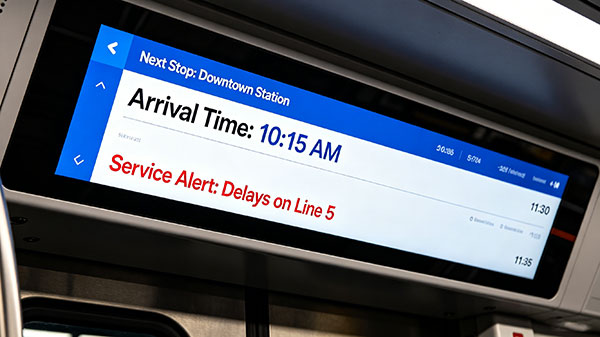
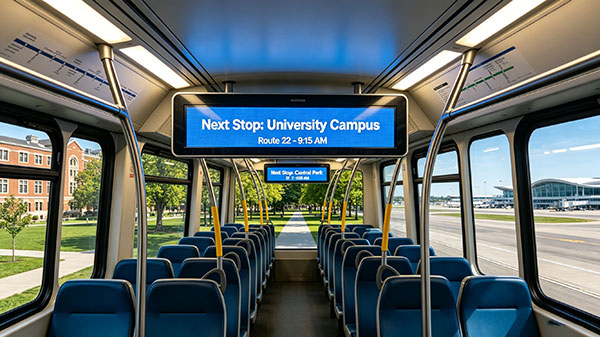
Application scenario display
Recommended product model
Selected industrial grade display products for this application scenario have been validated in multiple practical projects
 ">
1000 Nits
">
1000 Nits
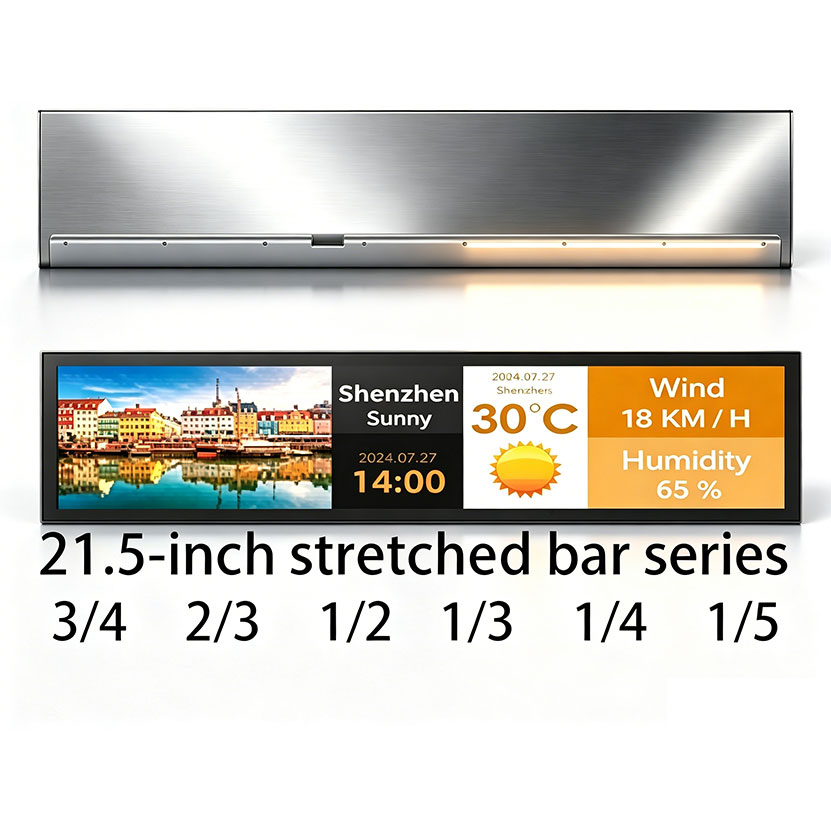
21.5 Inch Cuttable Bar LCD Display | Custom Stretched Panel 500-1000nits
model: HT215HDL-1000
 ">
1000 Nits
">
1000 Nits
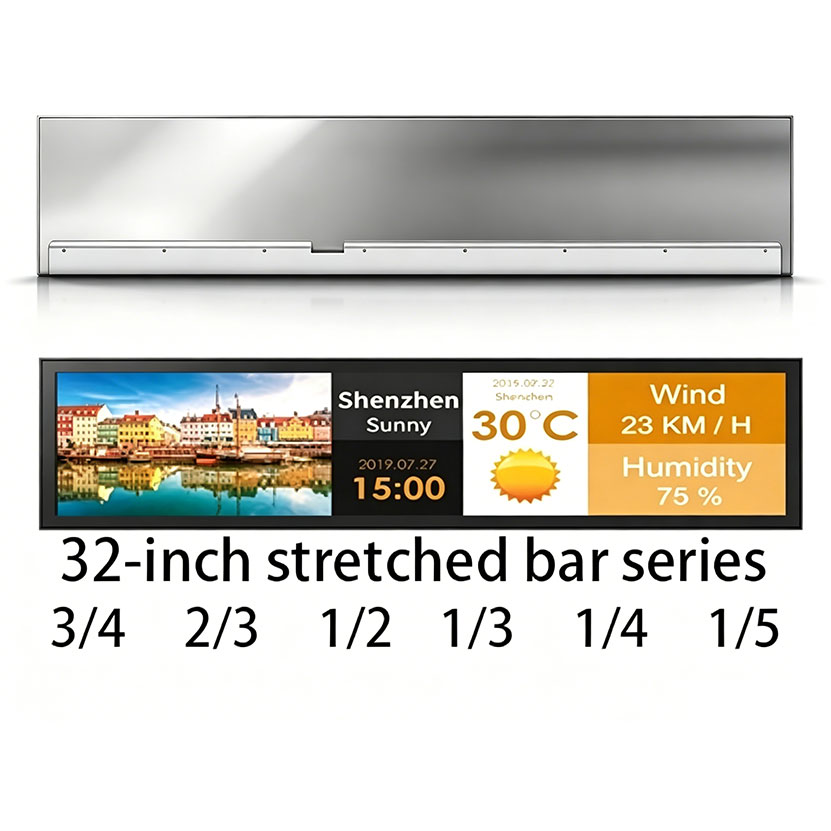
32 Inch Cuttable Stretched LCD Panel for OEM Integration Projects
model: HT320HDL-1000
 ">
1000 Nits
">
1000 Nits
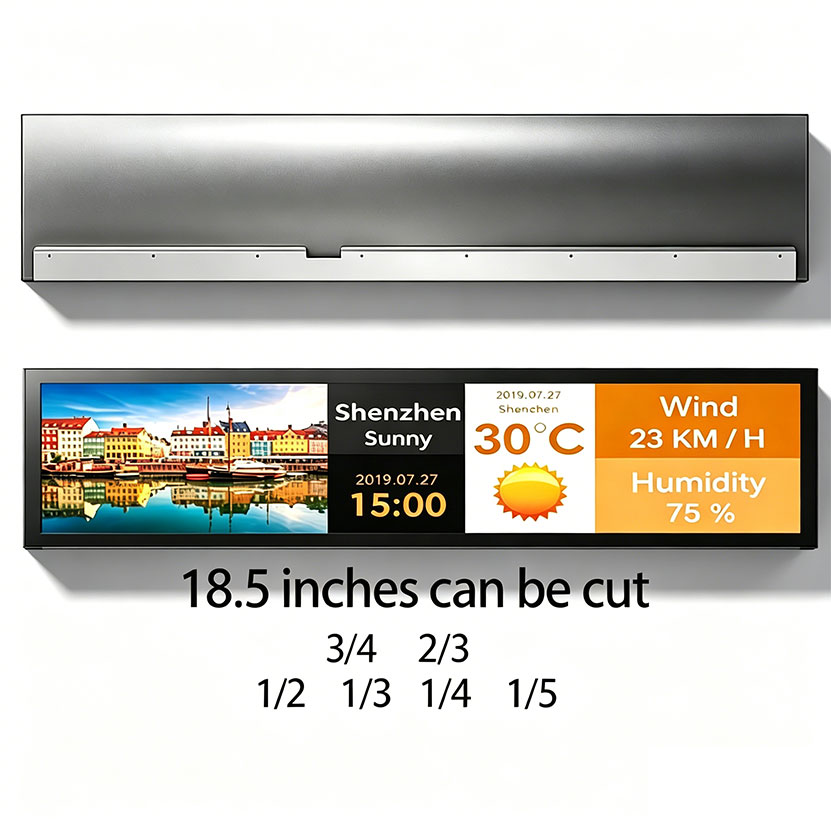
18.5 Inch Cuttable Stretched Bar LCD Display | 500-1000nits
model: HT185HDL-1000
Technical document download
Obtain detailed CAD structural drawings and technical specifications
ARE YOU READY TO IMPLEMENT THIS SOLUTION?
Our engineering team is ready to provide you with professional consultation and customized solutions. Whether you are conducting an initial evaluation or preparing for procurement, we can provide comprehensive technical support and flexible business terms.
