This solution is specifically designed for overseas distributors, system integrators, and manufacturers of outdoor advertising machines/transportation/retail equipment in the European and American markets. It focuses on the core concerns of purchasing managers, project managers, and technical leaders, covering the entire process of high-brightness LCD integration technical specifications, environmental adaptation design, European and American market compliance standards, and implementation guarantees. It ensures that the solution is professional, feasible, and compliant, fully in line with Google EEAT (Professionalism, Authority, Accuracy, Credibility) principles, and provides standardized technical support for product selection, project integration, and market access.
I. General Principles of the Plan
1.1 Solution Positioning
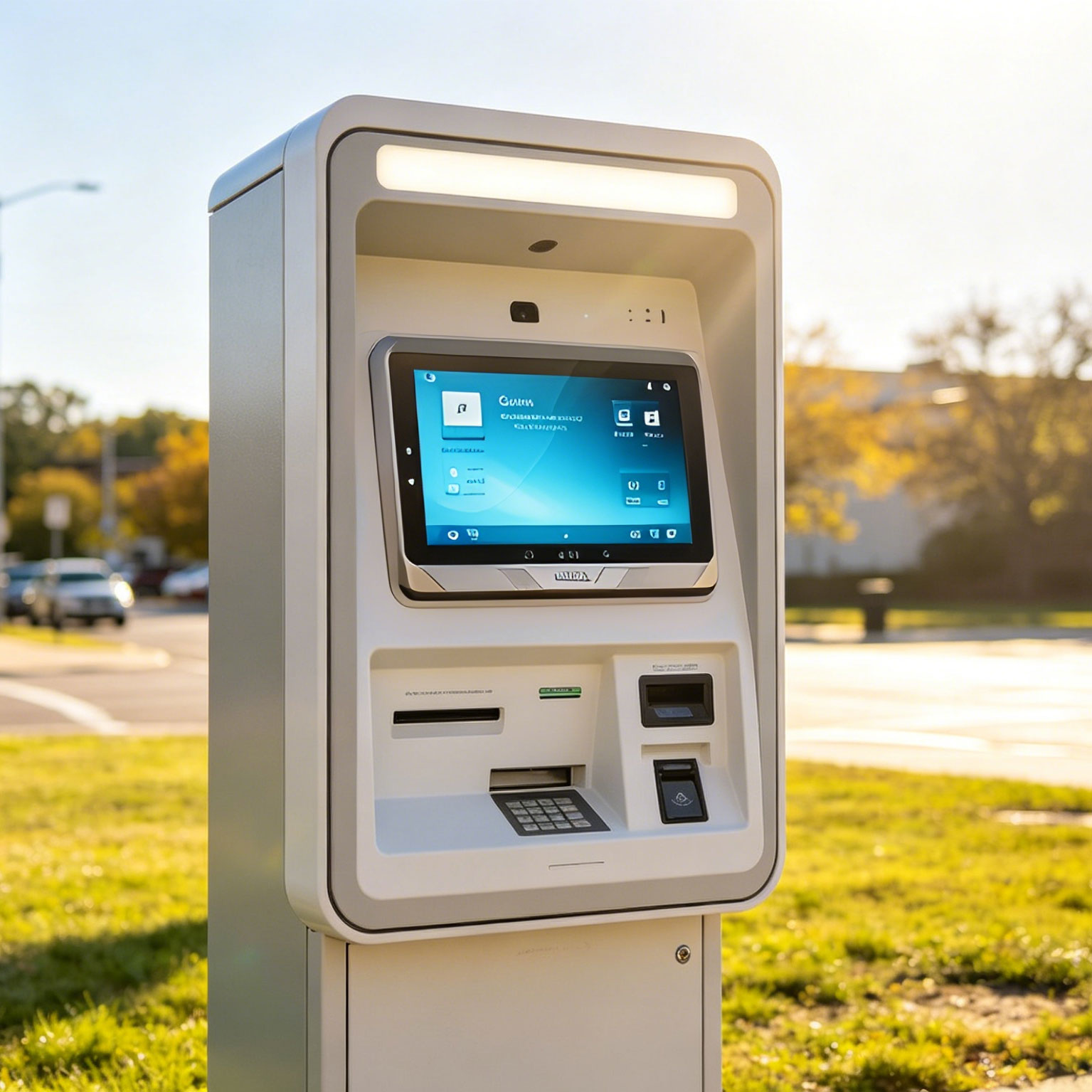
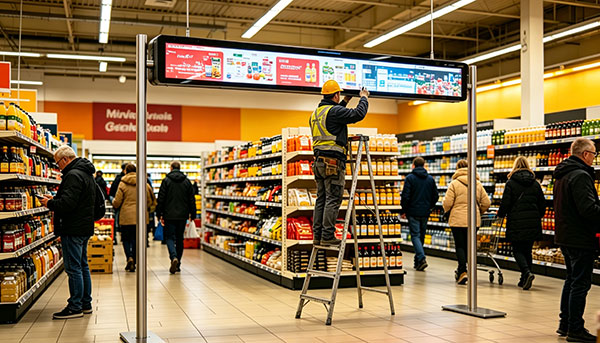
For all scenarios of outdoor self-service terminals in Europe and the United States (outdoor advertising machines, traffic inquiry terminals, retail self-service payment terminals, public guide terminals, charging pile terminals, etc.), we provide a full-chain solution for the selection, integration, testing, and compliance of high brightness LCD display modules. This solution addresses the core pain points of strong outdoor visibility, wide temperature stability, waterproof and dustproof, vandal protection, and compliance with European and American regulations, helping partners to quickly launch their products and promote them in the market.
1.2 Core Objectives
• Optical performance: Enables readability in all weather conditions under sunlight, with clear text and images without glare, suitable for strong outdoor light environments in Europe and America;
• Environmental adaptability: Meets the wide temperature range, weather resistance, and protection requirements of different climate regions in Europe and America (cold regions, high-temperature regions, coastal regions), and operates stably 24/7;
• Compliance: Fully compliant with EU and US mandatory standards and industry certifications, ensuring smooth entry of products into the European and American markets;
• Controllable costs: We provide modular design and standardized integration solutions to reduce procurement, integration and maintenance costs and enhance product competitiveness.
1.3 Scope of Application
This solution is applicable to overseas distributors for selection reference, system integrators for integration and implementation, and outdoor equipment manufacturers for product design and production. It covers mainstream outdoor self-service terminals ranging from 10.1 inches to 65 inches and can flexibly adjust parameters and designs according to specific scenarios (advertising, transportation, retail).
II. Core Technical Parameters (Core Reference for Procurement/Selection)
The following parameters all meet industrial-grade standards and European and American market requirements, and can be used directly as a basis for procurement selection. All parameters have been tested and verified by authoritative third-party institutions to ensure accuracy and reliability.
2.1 Core Parameters of Optical Display
Parameter name | Standard configuration | High-end configuration | Core requirements of European and American markets |
brightness | 1500~3000 cd/m² (direct sunlight level) | ≥3500 cd/m² | Ensures clear readability even in sunlight, without whitening or glare. |
Contrast | Static ≥1500:1, Dynamic ≥5000:1 | Static ≥2000:1, Dynamic ≥8000:1 | Under strong light, the edges of text and images are clear and not blurry. |
resolution | 1920×1080 (FHD) | 32-inch and larger models support 4K UHD. | Adapt to high-definition display needs such as advertising and traffic information |
Viewing angle | IPS panel, horizontal/vertical ≥170° | IPS panel, horizontal/vertical ≥178° | No color cast or brightness reduction when viewed from multiple angles, making it suitable for public scenes. |
Optical processing | AG anti-glare (haze 8%~15%) + AR anti-reflective coating, reflectivity ≤1.5%; OCA full lamination; anti-UV polarizer. | AG+AR+AF triple coating; LOCA liquid full lamination; high weather-resistant and UV-resistant polarizing film. | Anti-reflective, fingerprint-resistant, resistant to outdoor UV rays, and will not yellow for 5 years. |
Brightness adaptive | Built-in ALS light sensor, 0~100% PWM stepless dimming | Intelligent dimming + manual fine-tuning, supports remote brightness control | Balancing readability and energy efficiency, meeting ERP/Energy Star requirements. |
2.2 Environmental Adaptability Parameters (Core Outdoor Safety)
Parameter name | Standard requirements | Special requirements for Europe and America |
Operating temperature | -30℃ to +70℃ (industrial grade wide temperature range) | In Northern Europe, temperatures ≤ -30℃ require support for low-temperature heating; in Southern Europe, temperatures ≥ 70℃ require enhanced heat dissipation. |
Storage temperature | -40℃~+85℃ | Adaptable to the transportation and storage needs of extreme climates in Europe and America |
Protection level | IP65 and above | Coastal areas require IP66/IP67 rating, providing dustproof, waterproof, and salt spray protection. |
Impact-resistant/riot-proof | IK08~IK10 | Terminals in public areas need to be IK10 (withstanding 20J impact) to prevent smashing and vandalism. |
Weather resistance | UV resistant, salt spray resistant, damp heat resistant, and mildew resistant | Compliant with MIL-STD-810H, suitable for coastal and sandy areas in Europe and America. |
Vibration/Shock | Complies with IEC 60068-2-6 (Vibration) and IEC 60068-2-27 (Shock). | Suitable for vehicle and outdoor installation, and will not be damaged during transportation. |
2.3 Electrical and Reliability Parameters (Reducing Maintenance Costs)
• Power supply: 12V/24V DC (industrial grade), wide voltage range of 9~36V, supports overvoltage, undervoltage, reverse connection and short circuit protection, and is compatible with European and American power grid standards;
• Power consumption: ≤180W/㎡ at full brightness, ≤80W/㎡ at automatic dimming, meeting energy efficiency standards;
• Lifespan: LED backlight MTBF ≥ 50,000 hours, brightness decay ≤ 20% after 50,000 hours, reducing the frequency of later maintenance;
• Panel type: Industrial-grade IPS-TFT, Grade A (no bright spots or dark spots), high-temperature resistant liquid crystal material, suitable for long-term outdoor operation.
III. Core Integration Technology Solution (For Technical Lead/Integrator Reference)
This solution adopts a modular design, with standardized and replicable integration processes, reducing integration difficulty, ensuring stable operation of the integrated terminal, and taking into account the convenience of later maintenance.
3.1 High-brightness display technology solution (core competitiveness)
3.1.1 High-brightness backlight system (core readable in sunlight)
It adopts high-power industrial-grade LED chips (Epistar/Seoul/Nichia brands, original factory certification available), direct-lit LED strip array design, and is equipped with high-transmittance light guide plate (LGP) + BEF brightness enhancement film + DBEF reflective film, with light output efficiency ≥85%; equipped with constant current IC + PWM dimming driver, current accuracy ±1%, supports high temperature power reduction protection to avoid backlight overheating damage, and ensures brightness uniformity ≤5%.
3.1.2 Reflection Suppression and Full Lamination Process (Key Technology)
The cover glass is made of 3-6mm tempered glass (Mohs hardness 7H), with a triple coating of AG anti-glare, AR anti-reflection, and AF anti-fingerprint, effectively reducing reflectivity to ≤1.5%. Vacuum OCA optical adhesive full lamination process is used to eliminate the air layer between the panel and the cover glass, completely solving the outdoor reflection problem, while improving the display contrast by more than 40%. The frame is made of anti-UV ceramic ink, which will not fade or age with long-term outdoor use.
3.1.3 Touchscreen integration solution (optional, adapted to self-service interaction scenarios)
It adopts an industrial-grade 10-point capacitive touch module with a response time of ≤5ms and an accuracy of ±2mm. It supports touch control while wearing gloves and in the rain, and features strong light anti-interference and anti-mistouch algorithms. The touch panel integrates an IK10 anti-explosion design, which is suitable for outdoor public scenes where people may touch or bump into it. The interface adopts an industrial-grade shielding design to resist electromagnetic interference and comply with European and American EMC standards.
3.2 Thermal Management System (Key to Stable Outdoor Operation)
3.2.1 Heat dissipation design (passive + active combination)
• Passive heat dissipation: The backlight module is equipped with an aluminum alloy heat dissipation backplate + graphite heat dissipation film with a thermal resistance of ≤0.5℃/W, which can quickly conduct backlight heat; the whole machine adopts an aluminum-magnesium alloy shell + heat dissipation fins to increase the heat dissipation area and improve heat dissipation efficiency.
• Active cooling: Built-in NTC thermistor + industrial-grade PWM speed-controlled fan (life ≥ 50,000 hours), adopts "bottom air intake and top air exhaust" air duct design, and is equipped with IP65 dustproof filter + waterproof vent valve, which not only ensures heat dissipation effect, but also prevents dust and moisture from entering.
• Protection logic: When the temperature is ≥65℃, the brightness will automatically decrease to 50%; when the temperature is ≥75℃, the backlight will be turned off; and it will automatically recover after the temperature drops back to a safe range to prevent the device from being damaged by high temperature.
3.2.2 Low-temperature start-up design (essential for cold regions in Europe and America)
With a built-in PTC heating film, it automatically starts heating when the temperature is ≤-10℃ and stops heating when the temperature is ≥0℃. The heating power is ≤30W and the heating time is ≤5 minutes, ensuring that the display screen can be lit up quickly in low-temperature environments, making it suitable for use in cold regions such as Northern Europe and Alaska, North America.
3.3 Structural and protective design (suitable for harsh outdoor environments)
• Overall frame: Made of aluminum alloy/stainless steel with anti-corrosion treatment. 316 stainless steel is recommended for coastal areas to prevent salt spray corrosion.
• Sealing process: Laser welding + Dow Corning silicone rubber sealant is used to ensure IP65 or higher protection level and prevent dust and moisture from entering the equipment.
• Installation structure: Equipped with vibration-damping brackets and wind-resistant design, conforming to the European and American ASCE 7 wind load standard, with wind load resistance ≥120km/h, suitable for outdoor open-air installation;
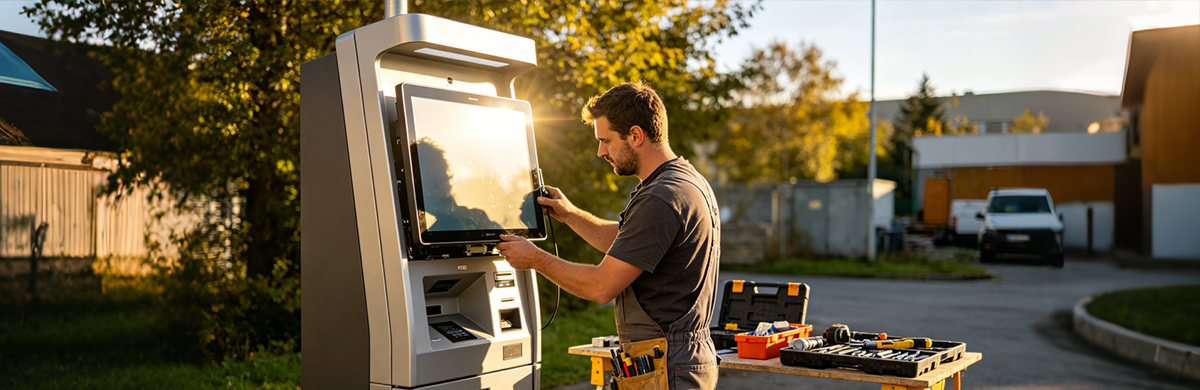
• Maintenance Design: Adopting a front/rear maintenance modular design, the display module can be disassembled independently without disassembling the entire machine, reducing the cost and difficulty of later maintenance.
3.4 Hardware Integration Specifications (Standardized Implementation)
1. Selection criteria: Based on the terminal size and usage scenario, select a display module that meets the requirements of wide temperature range, high brightness, IP65, IK10 and full European and American certifications, and give priority to products with mature application cases in the European and American markets;
2. Assembly specifications: Full bonding operations must be carried out in a Class 1000 cleanroom to avoid air bubbles and dust residue; the glue application on the frame must be uniform and continuous, without any gaps or overflows, and the curing time must be ≥24 hours;
3. Electrical connection specifications: Power supply uses industrial-grade DC sockets with wire diameter ≥18AWG and withstand voltage ≥1000V; signal interfaces (LVDS/EDP/HDMI) use shielded industrial-grade interfaces to reduce electromagnetic interference; temperature control modules (NTC, fan, heating film) are wired according to specifications and independently controlled to ensure signal stability.
4. Debugging specifications: After integration, a spectroradiometer is required to verify that the brightness meets the standard. A light intensity meter is used to calibrate the light sensitivity of the ALS sensor (±5%). The touch response accuracy is tested in strong light, rainy weather, and when wearing gloves.
IV. Compliance Standards and Certifications in European and American Markets (Core Concerns for Procurement/Project Managers)
The following are mandatory standards and certifications for the European and American markets. All standards reference current and effective regulations to ensure that products can successfully pass market access and avoid compliance risks. All certifications can be provided with test reports from authoritative third-party organizations.
4.1 EU Market (CE certification system, mandatory requirements)
4.1.1 Core Mandatory Instructions
• Low Voltage Directive (LVD, 2014/35/EU): Complies with standard EN 62368-1 (replacing EN 60950), requiring electrical safety, insulation withstand voltage ≥3000V, leakage current compliance, fire rating UL94 V-0, and thermal safety compliance to ensure the safety of electrical equipment.
• Electromagnetic Compatibility Directive (EMC, 2014/30/EU): Complies with standards EN 55032 (radiated interference), EN 55035 (immunity), and EN 61000-6-1/6-2, requiring Class A (industrial grade), no electromagnetic interference, and the ability to withstand strong outdoor electromagnetic environments;
• RoHS 2.0 + RoHS 3.0 (2011/65/EU + 2023/913/EU): Restricts 10 hazardous substances including lead, mercury, cadmium, hexavalent chromium, polybrominated biphenyls, and phthalates to ensure product environmental compliance;
• The ERP energy efficiency directive (EU 2019/2021) requires an EEI of ≤1.10, standby power consumption of ≤0.5W, and power consumption when powered off of ≤0.3W. It must also have automatic dimming functionality and comply with EU energy efficiency requirements.
• REACH Regulation (EC 1907/2006): Declarations for SVHC substances of very high concern (≥197 items) must be completed, with the content of each substance ≤0.1%, to avoid exceeding the limits for hazardous substances.
4.1.2 Industry-Specific Standards (Required for Outdoor Terminals)
• EN 12966: Standard for outdoor traffic/information displays, covering all aspects of testing including optics, environment, safety, and EMC, and mandatory requirements for self-service terminals in public areas;
• IEC 62262 (IK code): Must meet IK08~IK10 shock resistance rating, with IK10 preferred for public scene terminals;
• IEC 60529 (IP code): Protection level ≥ IP65, coastal areas require IP66/IP67;
• ISO 9241-302: Ergonomics, visibility and comfort of display devices to improve user experience.
4.2 US Market (Mandatory Certification + Industry Standards)
4.2.1 Core Mandatory Certification
• FCC Certification (FCC Part 15B): Electromagnetic compatibility requirements, meeting Class A (commercial grade), passing radiated/conducted interference tests; terminals with wireless capabilities require additional FCC ID certification;
• UL/ETL safety certification: The standard UL 60950-1/UL 62368-1 (IT equipment safety) is implemented, covering requirements such as fire protection, electric shock protection, and structural safety. It is a necessary certification for listing in the North American market.
4.2.2 Industry and Environmental Standards
• Energy Star: A commercial display energy efficiency standard, mandatory for North American government procurement projects, requiring compliance with energy efficiency standards for the corresponding size;
• California Proposition 65 (RoHS): Restricts the use of hazardous substances and mandates compliance declarations in the California market;
• MIL-STD-810H: US military standard for environmental testing, covering tests for temperature, humidity, salt spray, vibration, etc. High-end outdoor projects (such as transportation and military support) often require compliance with this standard.
4.3 Commonly Used International Standards in Europe and America (Unified Compliance Basis)
• IEC 60068: Environmental testing standard, covering all tests including temperature cycling, damp heat, vibration, and shock, is the environmental reliability standard commonly used in the European and American markets;
• ISO 9241: Ergonomics and visibility standards for display devices to ensure user comfort.
• ANSI/UL 94: Material fire resistance rating standard. All materials used in the machine must meet the V-0 rating to eliminate the risk of fire.
V. Testing and Verification Plan (to ensure product reliability and compliance)
All tests are conducted in accordance with European and American standards, and test reports from authoritative third-party organizations can be provided to ensure that products meet technical parameters and compliance requirements, providing a basis for procurement and project acceptance.
5.1 Optical Performance Testing
• Test equipment: Spectroradiometer (CS-2000), integrating sphere, gloss meter, multi-angle colorimeter;
• Test items: brightness, contrast, brightness uniformity, reflectivity, glare, and viewing angle;
• Acceptable standards: brightness ≥1500 cd/m², reflectivity ≤1.5%, no significant attenuation at a 170° viewing angle, and brightness uniformity ≤5%.
5.2 Environmental Reliability Testing
• Temperature cycling test: -30℃~70℃, 100 cycles. After the test, the equipment functions normally and there is no visible damage.
• Damp heat test: 60℃/95%RH, 500 hours, no condensation or corrosion on the equipment, and normal function;
• Salt spray test: 5% NaCl, 35℃, 168 hours (336 hours in coastal areas), IP seal intact, no corrosion;
• Vibration/shock test: Performed in accordance with IEC 60068 standard, with no damage during transportation and installation, and functions normally;
• IP protection testing: IP65 water spray test and dust test, with no dust or moisture entering the equipment;
• IK impact resistance test: IK 10 level (20J) impact, the equipment was undamaged and functioned normally.
5.3 Safety and EMC Testing
• EU: Testing is conducted by EU Notified Bodies (NBs), and CE certificates are issued (covering LVD, EMC, RoHS, and ERP).
• United States: Testing is conducted by FCC-accredited laboratories and UL-certified laboratories, and FCC and UL/ETL certification certificates are issued.
VI. Key Design Considerations for Differentiation in the European and American Markets (Reference for Distributors/Manufacturers)
By taking into account the differences in climate, regulations, and scenarios in the EU and North American markets, we have optimized design details to enhance product adaptability and market competitiveness.
6.1 Differentiation Design for the EU Market
• Energy efficiency requirements: Strictly comply with ERP instructions, must have automatic dimming function, control standby power consumption and power consumption when powered off, and ensure EEI meets the standards;
• Environmental requirements: Fully compliant with RoHS 3.0 and REACH SVHC, providing a complete compliance declaration and test report;
• Safety requirements: Terminals in public areas must meet the IK10 explosion-proof rating and comply with EN 12966 standards;
• Climate adaptability: The design enhances low-temperature heating in the Nordic region and high-temperature heat dissipation in the Southern European region to adapt to different climate environments.
6.2 Differentiation Design for the North American Market
• Certification requirements: Priority should be given to UL/ETL and FCC Class A certifications; high-end projects must meet Energy Star energy efficiency standards.
• Environmental adaptability: Enhanced salt spray protection (IP66/IP67) in California, enhanced sandstorm protection in the Midwest, and enhanced low-temperature heating in Alaska;
• Structural design: Complies with US ASCE 7 wind load standard, with wind load resistance ≥120km/h, suitable for extreme weather such as hurricanes and blizzards;
• Power grid compatibility: Wide voltage design (9~36V), compatible with North American power grid standards, and equipped with comprehensive electrical protection functions.
VII. Troubleshooting and Maintenance Guide (For Technical Manager/Integrator Reference)
It provides standardized troubleshooting processes and preventative maintenance solutions to reduce later maintenance costs and extend the lifespan of terminals.
7.1 Troubleshooting Common Faults (Quickly Locating Problems)
Fault phenomenon | Possible reasons | Troubleshooting and Solutions |
Insufficient brightness, not visible in sunlight | Backlight attenuation, light sensor malfunction, high temperature triggering brightness reduction | 1. Use a luminance meter to measure the backlight brightness. If the brightness is severely reduced, replace the LED strip. 2. Calibrate the ALS sensor and check the wiring. 3. Check the equipment temperature, clean the heat dissipation filter, and restore normal heat dissipation. |
Touchscreen malfunction or inaccurate response | Moisture ingress, strong light interference, touch sensor malfunction | 1. Check the equipment's sealing condition and replace the sealant; 2. Optimize the touch algorithm and shield against strong light interference; 3. Test the touch sensor and replace it if necessary. |
The equipment frequently enters high-temperature protection mode. | Clogged heat dissipation filter, fan malfunction, obstructed airflow | 1. Clean the heat dissipation filter; 2. Check the fan operation status and replace any faulty fans; 3. Check the air ducts to ensure smooth ventilation. |
Unable to start in low temperature environment | PTC heating film failure, temperature control circuit malfunction | 1. Inspect the heating film and replace any faulty components; 2. Check the wiring and control logic of the temperature control circuit and repair any malfunctions. |
7.2 Preventive Maintenance Plan
• Every 3 months: Clean the heat dissipation filter, check if the sealant is aging, and calibrate the display brightness with a brightness meter;
• Every year: retest optical performance, verify temperature control system, and conduct IP protection testing to ensure that all equipment performance standards are met;
• Every 2 years: Check the LED backlight decay and replace the LED strips if necessary; check the touch module response accuracy and optimize the algorithm.
VIII. Advantages of the Solution and Cooperation Guarantees
8.1 Core Advantages of the Solution
• Compliance Guarantee: Fully compliant with mandatory standards and certifications in the European and American markets, providing complete test reports to mitigate market access risks;
• Technically reliable: It adopts industrial-grade components and mature integration solutions, undergoes rigorous testing, and operates stably 24/7 with an MTBF of ≥50,000 hours;
• Cost controllable: Modular design and standardized integration process reduce procurement, integration and maintenance costs, and improve product cost-effectiveness;
• Scene adaptation: Parameters and designs can be flexibly adjusted according to different scenarios such as advertising, transportation, and retail to adapt to the differentiated needs of Europe and the United States.
8.2 Cooperation Guarantee
• Technical support: Providing distributors, integrators, and manufacturers with one-on-one technical consultation, integration guidance, and troubleshooting services;
• Certification Support: We provide complete European and American certification reports and compliance declarations to assist products in passing market access audits;
• Supply guarantee: A stable supply chain system ensures timely delivery of display modules and accessories, and supports bulk purchasing;
• After-sales support: We provide comprehensive after-sales maintenance services, respond quickly to troubleshooting needs, and reduce cooperation risks.
IX. Summary of the Plan
This solution focuses on outdoor self-service terminal scenarios in Europe and America, providing end-to-end technical support from selection, design, integration, testing to compliance certification, centered around the integration of high brightness LCD displays. It perfectly aligns with the core needs of overseas distributors, system integrators, equipment manufacturers, and their purchasing managers, project managers, and technical leads. The solution strictly adheres to the Google EEAT principle, with all technical parameters, standards, and testing methods referencing authoritative standards such as IEC, EN, FCC, and UL to ensure professionalism, accuracy, and reliability. Through modular design, differentiated adaptation, and comprehensive cooperation guarantees, it helps partners reduce project risks, control costs, and quickly launch outdoor self-service terminal products that meet the needs of the European and American markets, thereby enhancing their market competitiveness.
Appendix: Core Reference Materials
• EN 62368-1 Safety requirements for audio-visual, information technology and communication technology equipment
• FCC Part 15B Electromagnetic Compatibility Requirements
• IEC 60068 Environmental testing – Part 2: Test methods
• RoHS 3.0 (2023/913/EU) Restriction of Hazardous Substances Directive
• EN 12966 - Outdoor Information Display Screen Standard