The Core Pain Points in B2B Procurement — And How HITULCD Solves Them
For many B2B buyers involved in digital signage, retail system integration, transportation displays, or industrial equipment development, sourcing a reliable Stretched Bar Display often becomes a frustrating cycle of trial and error.
The first batch arrives — brightness is too low, and the screen becomes unreadable under store lighting.
The second supplier gets the dimensions right, but after three months in a high-temperature warehouse, the displays begin showing image distortion and panel failure.
The third vendor finally offers a decent panel, only to reveal that custom cutting is unavailable — forcing the entire enclosure design to be reworked from scratch.
These issues do not happen because procurement teams lack expertise.
They happen because industrial-grade stretched displays are fundamentally more complex than standard commercial monitors.
This guide explains the technical fundamentals behind Stretched Bar Displays, outlines the most common procurement risks, and demonstrates how HITULCD helps B2B customers reduce engineering risk, shorten development cycles, and improve long-term reliability.
1. What Is a Stretched Bar Display?
A Stretched Bar Display is an ultra-wide LCD display with a non-standard aspect ratio, designed for applications where traditional 16:9 screens are impractical.
From a manufacturing perspective, these displays are generally produced through two approaches:
Purpose-built custom LCD panels
Precision-cut panels derived from standard mother glass substrates
The second method is now widely adopted because it offers greater flexibility and lower cost — provided the cutting process is executed with high precision.
Poor cutting quality can lead to:
Light leakage
Uneven brightness
Color inconsistency
Structural weakness
Reduced panel lifespan
This is where engineering capability becomes critical.
As an industrial display manufacturer, HITULCD specializes in customized stretched LCD solutions ranging from 18.5” to 55”, supporting:
Custom size cutting
High-brightness backlight systems
Driver board integration
OEM/ODM development
Complete turnkey display modules
Instead of simply selling panels, HITULCD provides integrated display solutions engineered for real-world deployment.
2. The Five Biggest Technical Challenges B2B Buyers Face
Pain Point #1 — Incorrect Brightness Selection
This is the most common failure scenario in stretched display projects.
Many buyers unknowingly source displays designed for consumer environments, typically rated at only 200–300 nits. Once installed behind storefront glass or under strong retail lighting, the content becomes nearly invisible.
Brightness selection must always match the installation environment.
Recommended Brightness Guidelines
| Application Environment | Recommended Brightness |
|---|---|
| Standard indoor areas | 300–500 nits |
| High-ambient indoor environments | 500–1000 nits |
| Semi-outdoor installations | 1000+ nits |
| Direct sunlight outdoor applications | 1500–3500 nits |
HITULCD’s industrial high-brightness display solutions support outputs up to 3500 nits, ensuring sunlight readability even in demanding outdoor conditions.
More importantly, HITULCD offers brightness customization based on:
Installation environment
Power consumption targets
Thermal management requirements
Product lifespan considerations
Instead of forcing customers into “maximum brightness by default,” the company engineers balanced solutions optimized for real deployment conditions.
Pain Point #2 — Insufficient Temperature Tolerance
Transportation systems, outdoor kiosks, warehouse equipment, and factory automation environments expose displays to severe temperature fluctuations.
Consumer-grade displays typically operate within:
0°C to 50°C
In real industrial environments, temperatures frequently exceed these limits.
Common failures include:
Slow response time
Darkened image
Ghosting
Random shutdowns
Permanent panel damage
HITULCD industrial stretched displays are engineered for extended temperature ranges of:
-20°C to 70°C
This capability comes from:
Industrial-grade panel selection
Specialized backlight driver design
Optimized thermal management systems
Long-duration reliability validation
Not simply from adding an “industrial” label.
Pain Point #3 — Display Size Does Not Match Product Design
OEM and ODM manufacturers often face a frustrating problem:
The display dictates the product shape — instead of the product defining the display.
Standard stretched LCD sizes are limited, which forces hardware teams to compromise industrial design, ergonomics, or installation constraints.
HITULCD solves this through custom engineering support.
Customers can provide:
Mechanical drawings
Visible area requirements
Mounting dimensions
Bezel specifications
HITULCD’s engineering team then evaluates:
Cutting feasibility
Structural stability
Yield rate risks
Optical consistency
Integration compatibility
Sample validation is completed before mass production begins.
For hardware developers, this creates significantly greater design freedom.
The display becomes a flexible module — not a design limitation.
Pain Point #4 — Interface Compatibility Problems
Industrial display integration involves multiple signal standards, including:
LVDS
eDP
MIPI
HDMI
A mismatch between the display interface and the customer’s control platform can result in:
PCB redesign
Additional converters
Firmware delays
Extended development cycles
HITULCD provides complete driver board solutions supporting multiple mainstream interfaces, along with technical integration documentation to help engineering teams accelerate deployment.
For customers without extensive display integration experience, this support significantly reduces development complexity and engineering overhead.
Pain Point #5 — Missing Certifications for International Markets
For products entering Europe and North America, certifications such as:
CE
FCC
are mandatory.
Many low-cost suppliers cannot provide valid compliance documentation, creating serious risks during:
Customs clearance
Retail platform approval
Project certification
End-customer audits
HITULCD products are certified for CE and FCC compliance and supported by a global supply chain framework, helping international customers reduce regulatory friction and procurement uncertainty.
3. The Engineering Logic Behind Proper Display Selection
Professional stretched display sourcing should follow a structured engineering process.
Step 1 — Define Environment Conditions
Determine:
Ambient brightness
Maximum/minimum operating temperature
These two parameters are non-negotiable baseline requirements.
Step 2 — Confirm Mechanical Dimensions Early
Never assume every size is manufacturable.
Provide suppliers with:
Exact dimensions
Visible area specifications
Bezel requirements
Mounting structure details
Then request:
Technical feasibility analysis
Cutting tolerance data
Sample validation
before committing to volume production.
Step 3 — Verify Signal Interface Compatibility
Share your platform specifications early.
A qualified supplier should clearly explain:
Supported interfaces
Driver board architecture
Signal conversion requirements
Integration documentation
If technical communication is vague, that is a major warning sign.
Step 4 — Validate Certifications and Supply Stability
Always confirm:
CE/FCC documentation
Lead times
Long-term panel availability
EOL (End-of-Life) replacement strategy
Display panels are periodically discontinued in the LCD industry.
A supplier’s continuity strategy directly impacts your long-term project stability.
4. Real-World Applications of HITULCD Stretched Displays
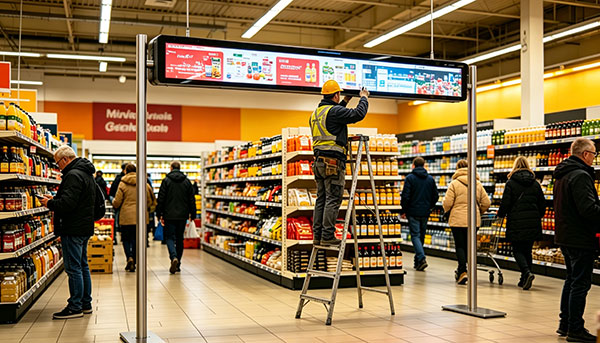
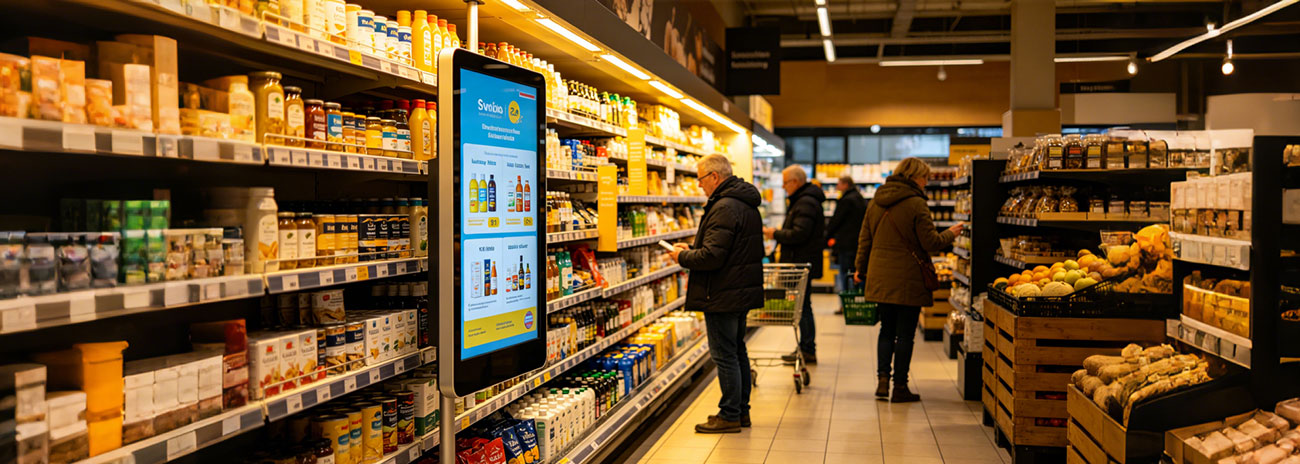
Smart Retail
Shelf-edge displays have become a core component of modern retail digitization.
Stretched displays replace paper labels with dynamic content capable of showing:
Pricing
Promotions
Brand messaging
Inventory information
HITULCD provides:
Ultra-narrow bezel designs
Slim backlight modules
Lightweight integration structures
Flexible mounting compatibility
for modern retail shelving systems.
Transportation Systems
Applications in:
Buses
Subways
Airports
Rail stations
require 24/7 operational stability under:
Continuous vibration
Humidity
Temperature fluctuation
HITULCD transportation-grade stretched displays are designed for industrial reliability while supporting real-time information system integration.
Industrial Automation
Factory HMIs often operate in:
Dusty environments
High temperatures
Oil-contaminated conditions
while requiring compact installation spaces.
HITULCD provides open-frame stretched display modules optimized for industrial equipment integration, complete with:
Driver boards
Mounting structures
Industrial-grade reliability support
Medical Equipment
Medical systems demand:
High color consistency
EMC compliance
Easy surface cleaning
Long-term operational stability
Applications include:
Bedside information systems
Medical carts
Infusion pump interfaces
HITULCD supports customized development for specialized medical requirements while maintaining CE compliance for European markets.
Outdoor Advertising
Outdoor signage requires the highest brightness levels in the industry.
HITULCD’s high-brightness display series delivers up to 3500 nits, combined with:
Anti-glare protection
Industrial thermal design
Weather-resistant integration capability
to ensure readability under direct sunlight.
5. Why B2B Customers Choose HITULCD
True Industrial Engineering Capability
HITULCD is not a trading company reselling standard commercial panels.
The company maintains in-house engineering expertise covering:
Backlight system design
Driver board development
Thermal optimization
Custom display integration
Customers communicate directly with engineers who understand real deployment challenges.
Structured Customization Process
From custom cutting to brightness optimization and OEM/ODM development, HITULCD follows a professional engineering workflow including:
Feasibility evaluation
Sample confirmation
Technical review
Quality validation
Mass production control
This dramatically reduces project uncertainty.
Global Compliance & Supply Support
With CE/FCC certification support and international supply chain experience, HITULCD helps customers reduce risk when entering overseas markets.
The company acts as a long-term industrial display partner — not merely a low-cost component vendor.
Conclusion
Stretched Bar Displays are not commodity products.
They sit at the intersection of display technology, thermal engineering, optical optimization, and industrial integration.
Selecting the wrong supplier can easily lead to:
Project delays
Product redesign
Field failures
Certification problems
Long-term supply instability
For B2B buyers and equipment manufacturers, the real priority is not finding the cheapest display.
It is finding a supplier capable of:
Understanding engineering requirements
Supporting long-term integration
Delivering stable industrial-grade quality
Providing continuous supply reliability
That is exactly where HITULCD focuses its expertise.
To learn more about customized Stretched Bar Display solutions, visit
HITULCD Official Website
Or contact the engineering team directly to discuss your project requirements — from prototype validation to mass production deployment.